
How healthy are your cells? : Test First, Then Decide What You Need
Most of us have had blood tests for things such as iron, cholesterol, blood sugar or vitamin D. But there is another aspect of health that is rarely assessed:
the balance of fats incorporated into our cell membranes, and it is actually more important than any other test!.
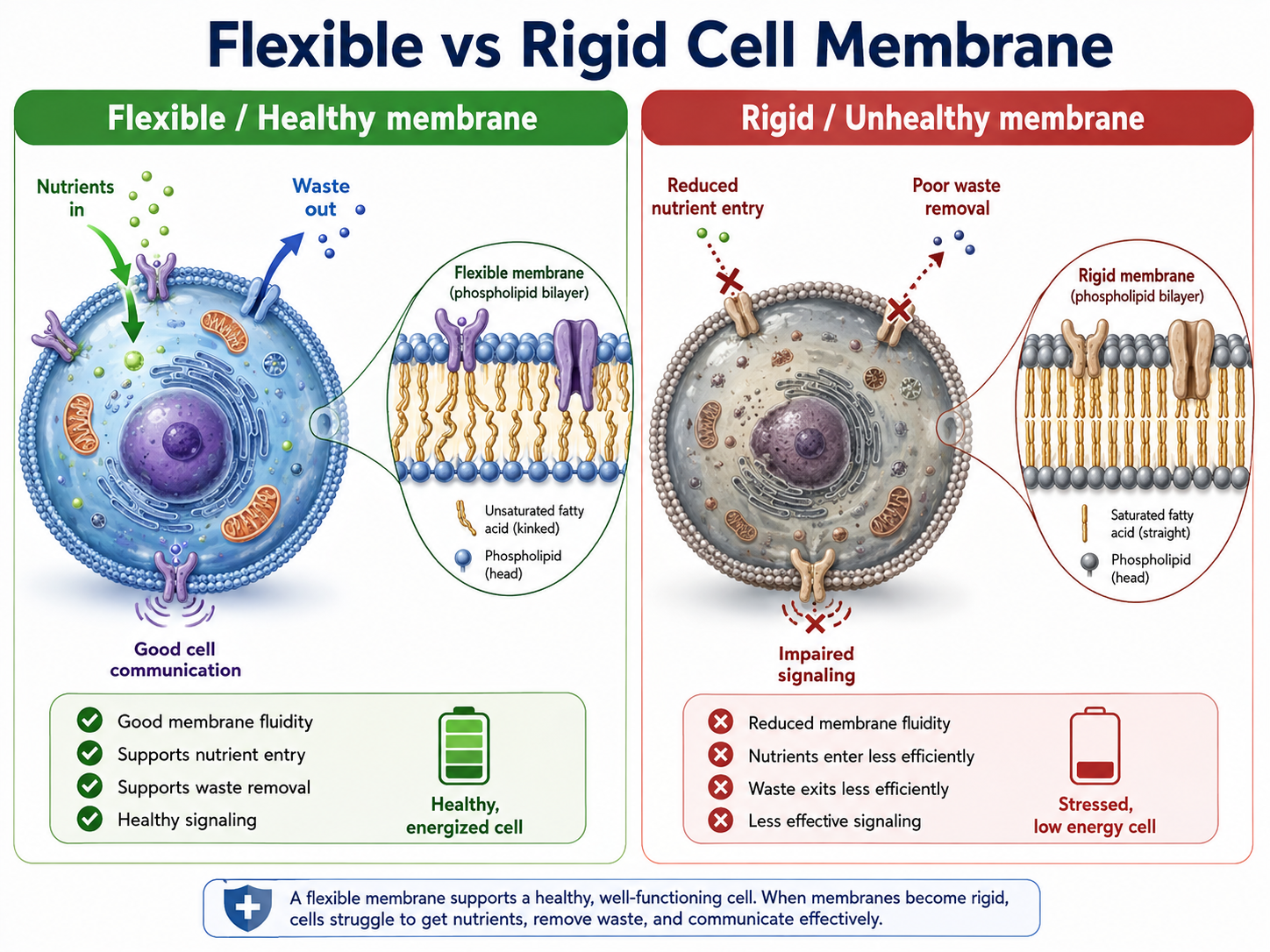
Every cell in your body is surrounded by a membrane made largely from fats. This membrane is not meant to behave like a hard shell. It needs an appropriate degree of fluidity and flexibility so that:
membrane proteins can function properly
the trillions of cells in our bodies can communicate
substances (nutrients, water) can be transported into the cell.
Wastes can be transported out of the cell.
Omega-3 fatty acids: particularly EPA and DHA become incorporated into cell membranes and can influence their physical properties, including membrane fluidity and organisation.
Why test your fatty acids?
The Zinzino BalanceTest is a simple dried blood-spot test that measures 11 fatty acids in your blood. From these measurements it calculates several markers, including your Omega-6:3 balance, Omega-3 Index and an index of cell membrane fluidity. Results are generally available within three weeks and include a 24 page report on your cellular health, sources of different fats in the diet and recommendations on how to adjust the ratios in your diet.
This means we can see where your fatty-acid balance is starting from and decide whether ongoing supplementation is actually warranted. If you are already taking a supplement, this is a good way to find out whether it is working. Many fish oils on the market are not only of poor quality but may actually be contributing to inflammation, even the expensive brands. Read more about fish oil standards here
Ask yourself: How well are you absorbing your good food and supplements? How well are your cells excreting waste?

Symptoms of Omega 3/6 imbalances
These symptoms can have many causes, but they are useful areas to monitor when looking at changes in fatty-acid balance, inflammation and overall cellular health:
Joint and muscle discomfort: aching joints, stiffness, tenderness, muscular pain, slow recovery after exercise
Energy: fatigue, low stamina, afternoon slumps, reduced exercise tolerance
Brain and cognition: brain fog, poor memory, difficulty concentrating, reduced focus and attention
Mood and nervous system: irritability, low mood, anxiety, feeling mentally overwhelmed
Skin: dryness, eczema, dermatitis, rough or flaky skin, slow skin recovery
Head and eyes: headaches, dry eyes, visual fatigue
Sleep: difficulty falling asleep, restless sleep, waking unrefreshed
Inflammatory symptoms: general aches, morning stiffness, prolonged soreness or sensitivity
Metabolic health: difficulty managing weight, cravings, energy fluctuations after meals
Reproductive and hormonal health: PMS, fertility issues, menstrual discomfort, irregular cycles, menopausal symptoms
Circulation: cold hands and feet, poor peripheral circulation
General resilience: frequent feeling of being run-down, reduced physical recovery, lower overall sense of wellbeing




Sed purus sem, scelerisque ac rhoncus eget, porttitor nec odio. Lorem ipsum dolor sit amet.